

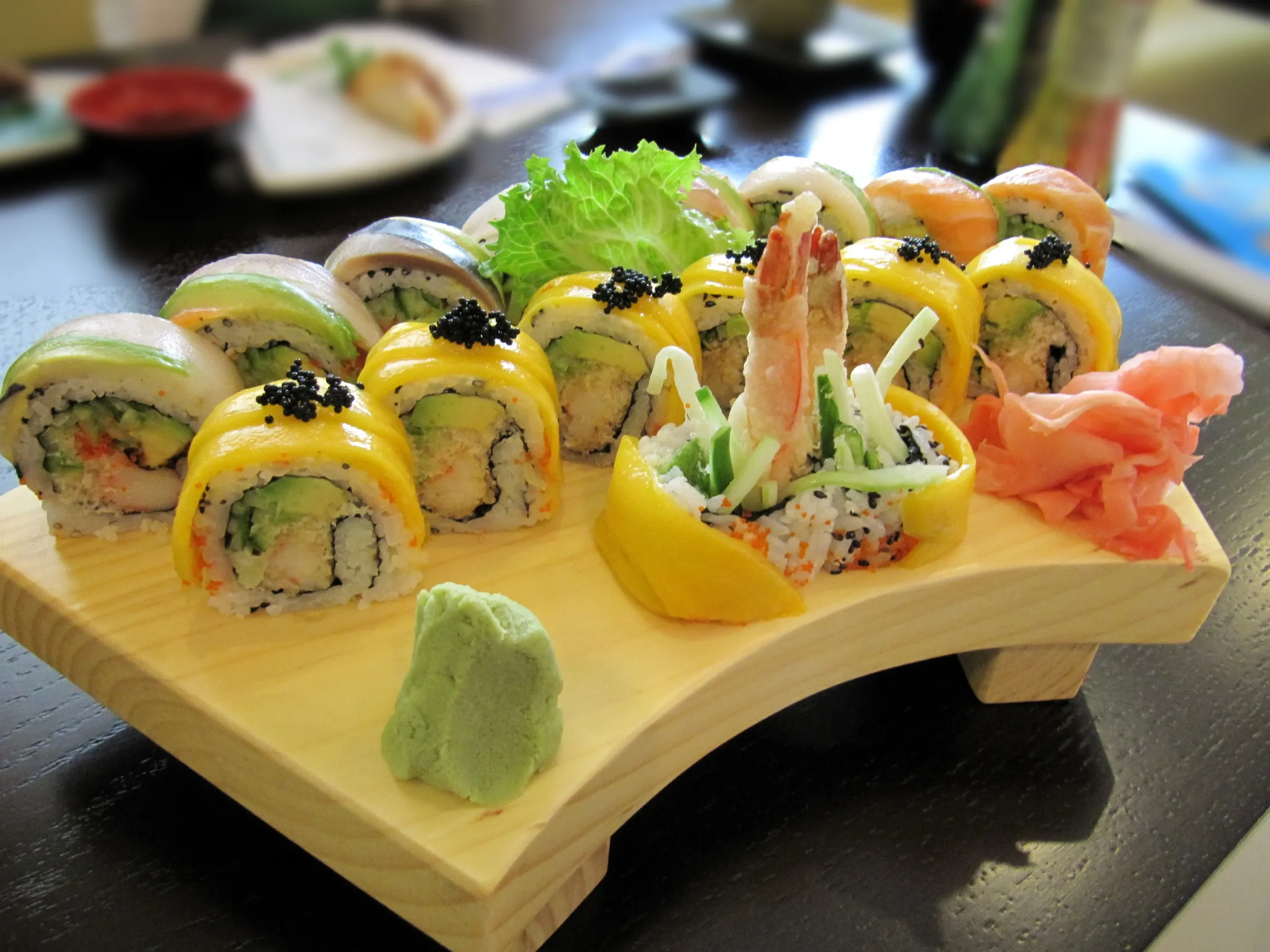
Imagine transforming your kitchen into a Japanese culinary paradise with these mouthwatering homemade maki sushi rolls! Whether you're a sushi novice or a seasoned home chef, this recipe will transport your taste buds to the vibrant streets of Tokyo with every perfectly crafted bite. Get ready to impress your friends and family with restaurant-quality sushi that's surprisingly simple to create right in your own kitchen!
Prep Time: 20 mins
Cook Time: 15 mins
Total Time: 35 mins
Cuisine: Japanese
Serves: 2 servings
Ingredients
- 2 cups sushi rice
- 4 sheets nori
- 1 cucumber, sliced
- 1 avocado, sliced
- Soy sauce for serving
Instructions
- Begin by rinsing the sushi rice under cold water in a fine mesh strainer. Rinse the rice until the water runs clear to remove excess starch, which helps achieve the desired texture.
- Transfer the rinsed sushi rice to a medium saucepan and add 2 1/2 cups of water. Allow the rice to soak for about 30 minutes to 1 hour for optimal texture.
- After soaking, bring the saucepan to a boil over medium-high heat. Once boiling, reduce the heat to low, cover the saucepan with a lid, and let it simmer for about 15 minutes. Do not lift the lid during cooking.
- Once the rice is cooked, remove the saucepan from the heat and let it sit, covered, for an additional 10 minutes to allow it to steam.
- While the rice is steaming, prepare the sushi vinegar by combining 1/4 cup of rice vinegar, 2 tablespoons of sugar, and 1 teaspoon of salt in a small saucepan. Heat over low heat, stirring until the sugar and salt dissolve. Remove from heat and let it cool.
- Once the rice has finished steaming, transfer it to a large bowl and gently fold in the sushi vinegar using a wooden spatula. Be careful not to mash the rice; you want to maintain its texture. Allow the rice to cool to room temperature.
- While the rice is cooling, prepare the filling ingredients. Slice the cucumber and avocado into thin strips. Set aside.
- Place a bamboo sushi mat on a clean, flat surface. Lay a sheet of nori, shiny side down, on the mat.
- With wet hands (to prevent sticking), take about 1 cup of the cooled sushi rice and spread it evenly over the nori, leaving about 1 inch of space at the top edge. Press the rice down gently but firmly to ensure it adheres.
- Arrange a few slices of cucumber and avocado horizontally across the center of the rice.
- Using the bamboo mat, carefully lift the edge closest to you and start rolling the sushi away from you, tucking the filling in as you go. Roll tightly but not too tight, as this can cause the filling to squish out.
- Once rolled, use the bamboo mat to shape the roll by gently pressing it into a cylinder. Moisten the top edge of the nori with a bit of water to seal the roll.
- Repeat the process with the remaining nori sheets, rice, and fillings.
- Once all rolls are made, use a sharp knife to slice each roll into 6-8 pieces. Wipe the knife with a damp cloth between cuts to ensure clean slices.
- Arrange the sliced maki sushi on a serving platter and serve with soy sauce for dipping.
Tips
- Rice is the Heart of Sushi: Take your time rinsing the rice thoroughly and allow it to soak before cooking. This crucial step ensures the perfect sticky texture that's essential for great sushi.
- Keep Your Hands Wet: When handling sushi rice, always keep your hands slightly damp. This prevents the rice from sticking to your fingers and helps you spread it evenly.
- Invest in the Right Tools: A bamboo sushi mat and a sharp knife are game-changers. A sharp knife ensures clean, precise cuts without squishing your carefully rolled sushi.
- Don't Overfill: Less is more when it comes to sushi filling. Too many ingredients can make rolling difficult and cause the roll to fall apart.
- Chill Your Ingredients: Use slightly chilled cucumber and avocado for the best texture and to help the roll hold its shape.
- Practice Makes Perfect: Don't get discouraged if your first few rolls aren't picture-perfect. Sushi rolling is an art that improves with practice!
- Experiment with Fillings: Once you've mastered this basic recipe, try different combinations of vegetables, fish, or proteins to create your own unique maki rolls.
Nutrition Facts
Calories: kcal
Carbohydrates: g
Protein: g
Fat: g
Saturated Fat: g
Cholesterol: mg
